

Rooted in Marcy Angeles‘ experience as a Nednhi Apache and Guamares Two Spirit artist living with PTSD, Data Mining explores the search for information—both spiritual and personal—in a world where nothing feels sacred. Moving between glitchy introspection, post-punk defiance, and meditative communion with nature, the record confronts gatekeeping, historical trauma, and the politics of love while seeking healing through surrender and self-knowledge. Here are six questions to get to know Marcy Angeles.
Experimental in Nature
How did you first get into making music?
Marcy Angeles: I have always been a music junkie since I was a child. I spent so much time writing and painting. In 2015, it felt like there was so much more to say. My first project was TVOD and it was intended to give PTSD a sound. For people to understand PTSD, I tried to translate the feeling to sound art. Eventually, what I created began to sound a little more musical. I began DJing in 2008 and the response/the gatekeepery was enough for me to say “you’re not going to tell me what to do.”
What is a formative experience / a musical memory that shaped who you are as an artist today?
I was at a rave in 2001 that was under railroad tracks. Every half hour, a train went overhead. It was the rush of the lights and the overwhelming feeling of dust falling on to our faces. The lack of safety because creating in an honest way is truly rarely safe. I love trains, the mechanical appearance of them and the sound of trains moving on train tracks. Listening to the birds in springtime and coyotes calling to each other. The desert makes more sound than one would expect. There was an inner calling to tell truths that are not always heard and very rarely welcome.
How would you describe the kind of music you make?
My music is very experimental in nature. The long answer is that I have made music in the genres of electro-acoustic, trip hop, noise rock, ambient, industrial, experimental electronic and more. Sticking to one genre is too confining, much like sticking to one specific media form. I have a very journalistic approach and some of the songs I have written tell very real stories. “Angel On The Redlight District” from my album Soundtracks For Desert Movies paints a clear picture of the troubles of dating as a Trans Woman. “My Skin Crawls” off my album Soap, Water & Skin from my project Llaace talks about the sadly very taboo situation of dealing with a stalker. It is much more than survivor’s guilt of outliving people from your community but it’s almost like society wants us to feel guilty for surviving too. 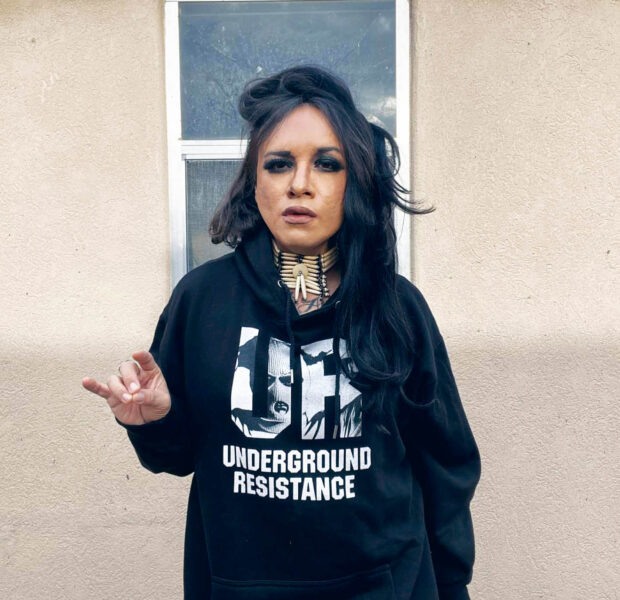

My music is meant to empower the communities I come from and to empower myself as I reach to my Ancestor’s for strength.
Human Relating
Your record is called Data Mining. What does that title mean to you?
I live my life with medically diagnosed C-PTSD and Agoraphobia. Data Mining speaks of being an information receptor. To people watch from my bubble. The information I find inside when being introspective and from the outer world when digitally people watching. Outside of us, people have a way of interacting. Learning how to interact with each other. On social media, people see about 5% of our lives and jump to conclusions. Our information isn’t always kept sacred but it is out there and people have a response to it. We respond to each other with what information we have from one another.
There is always so much more to someone’s story. It’s about giving up control over things that can not be controlled. Finding what is relatable to reach another being. Love and Heartbreak are the two most relatable things, something I also referenced in my new book Immutable Amative Ballads. What does our soul say? What does their soul say? Scanning situations for each other’s humanity. To remember that we are all beings with spirits that need the same planet to survive. Also a reminder of why I love being reclusive.
What is one song on the record that is special to you? Why?
“Do You See God’s Child?” The song is a prayer. One needed more now than it’s been needed in a long time. To be able to see Creator in each other’s face. Not to just see one’s humanity. But to see one’s connection to Creator. That Creator took the same energy to make all of us. It is really easy to hate each other. Hate is easy but loving other beings, despite being made different is hard. There are many different types of plants that provide oxygen. The plants are our relatives. We come from the same Mother Earth and like the diversity of plants, all human beings provide something important too. In my book Immutable Amative Ballads, I describe this essence as Shine.
Taking Back the Rave Scene
Beyond music, you also work as a journalist and have published the book The Queers of the Underground about queer/trans contributions to the foundation of rave culture from the indigenous Two Spirit perspective. What did you find out in the process of researching the book? How does that resonate with your music?
I grew up in the rave scene. I started going to raves over 25 years ago. The culture was once a space for misfits to gather to create community. Sub-cultures are very important in this way because they are inherently political. The rave movement has been referred to as the second coming of the hippie movement. In this book, I highlight that queer and trans people of color were very vital in building the foundation of rave culture. A place to dance in the safety of the cloak of night. 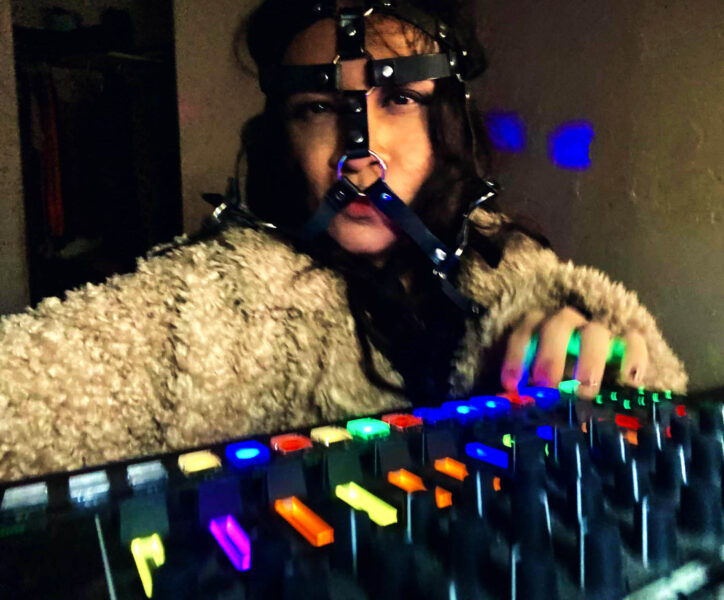

Many queer and trans people only got to celebrate life in places where society couldn’t see. Unfortunately, over the years many rave scenes began to push trans people out globally.
There was a not so subtle takeover and it is something that brought many queer and trans DJs, musicians, producers, writers and party promoters together. In 2020, Gavilan Rayna Russom hosted a nightlife conferenced named the Halloquium. It is how I met the founders of exude records, who very similarly to Voluminous Arts have a shared desire to showcase trans art. In The Queers Of The Underground, I draw comparisons of rave culture being taken from queer/trans folks and it being worth more when being commercialized by cisgender heteronormative men to the colonization of native lands. Very similarly to how impoverished communities lose access to affordable housing and the culture built around their communities due to gentrification.
Trans art needs to be taken seriously. A reminder of how contributions to not just electronic music but trans contributions to industrial music and the way trans folks have inspired glam rock and rock n roll. It is important to understand the history behind the genre and behind a sub-culture. It is also reminder why gender variant music, art and writing should be supported.
Data Mining by Marcy Angeles is out 20th of February via exude records. Stay up to date with Marcy via her Instagram.