

Dressed in a nuns costume singing over synth-y goth melodies in a resonant vocal timbre that stands out among other vocalists: Tiffadelic is an artist who does what she wants. Born and raised in Detroit in a musical family, the artist remembers a wide range of influences being present in her childhood – from Telepopmusic to Sade and Jimi Hendrix or The Chemical Brothers.
Tiffadelic remembers: “I was always making up random songs — rapping along to tracks, changing lyrics to songs I loved, beatboxing, and creating all kinds of sounds with my mouth. I did it so much that one of my teachers nicknamed me ‘the sound effect machine’. By eighth grade, I had my first guitar and keyboard, and music had fully become part of my identity.” By age 22, they had started producing their own music and released their debut record Retrosynthesis Vol I in 2025. In conversation with OFFKEY, Tiffadelic shares some insights into her musical journey, the goth scene and how growing up in Detroit shaped her sound.

OFFKEY: Who are some artists that influenced your sound?
Tiffadelic: My influences span both energy and vocal presence. Alan Vega inspired the raw intensity and stripped-down sonic attitude I gravitate toward. Vocally, I was drawn to the power and freedom of Grace Slick, Annie Lennox (an influence I recognized more clearly later on), and Jim Morrison. John Maus deeply influenced my desire to explore darker, lower, and more introspective vocal spaces, while Ian Curtis challenged me to push my voice deeper as a woman and embrace emotional weight without restraint. I’m also shaped by the bold presence of Grace Jones, the attitude and edge of Billy Idol, and the boundary-breaking spirit of Jimi Hendrix— and many more who continue to influence my sound and vision.
No Longer Explaining Myself
The Tiffadelic sound is reminiscent of 80s dark and synth wave with goth elements. How did you get into that style?
I really got into this style through my mom. She’s a huge ’80s head, and that era was a major part of the culture in our home growing up. It was everywhere — in the music, the movies, the fashion, the TV shows, the way we sang, and even in the reference points I learned from. I feel like it’s something I naturally adopted creatively because it was so deeply embedded in my environment. A lot of my early lessons on life even came from watching shows like Degrassi from the ’80s learning about life, identity, and emotion through those stories. That era shaped my taste and my perspective in a way that still shows up in my life.
Goth like Punk, Grunge, Rock, are genres that have been appropriated by white creators to an extent that their roots in Black art and Black creators get overlooked. What is your take on the goth music scene and how do you experience it as a queer Black person?
My take is that anyone can listen to this kind of music — regardless of race, sexual orientation, skin color, religion, or background. Growing up, I never cared who a genre was supposed to belong to. Which it’s never meant for just one kind of person . People make these kinds of things up and I think its quite stupid. I listened to what moved me. If anything, being drawn to goth, punk, rock, Cultural Music from different countries, alternative music, etc. made me feel more unique, especially because a lot of people around me weren’t familiar or found it to be “weird” or “funny”.
That said, it definitely didn’t make growing up easy. As a young Black girl, I was bullied heavily for not liking what I was “expected” to like. I was called things like “Oreo” or accused of wanting to be white simply because of the music I listened to. I remember one time bringing a stack of Jimi Hendrix CDs to school, and classmates laughed and threw them across the classroom — somehow, I ended up being the one in trouble. Kids were cruel simply because my interests didn’t fit their idea of what a Black girl should be.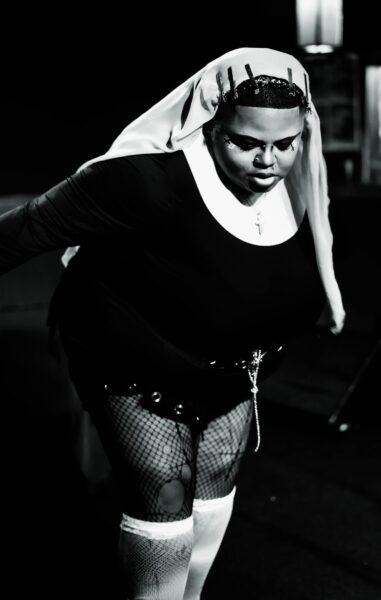

Now, as an adult, I feel like I’m fully back in my goth/alt bag — but this time with freedom, safety, and self-acceptance. I understand the history, I understand the roots in Black creativity, and I no longer feel the need to explain or justify myself. This is truly who I am. I feel liberated, grounded, and more like myself than ever, and I wouldn’t trade that for anything.
You mentioned an obsession with Jimi Hendrix when you were a teenager. What about his sound and persona did you connect with?
What I connected to most with Hendrix was his experimental, cosmic, and random nature. The unpredictability in his lyrics and his playing really grabbed me. I saw him as a musical god. I studied him constantly — I knew all the lyrics, all the songs, and even some of the dialogue from his CDs by heart. A walking, talking Hendrix encyclopedia, and I definitely got made fun of for it. His persona, his style, and his energy helped mold me into who I am today. I felt a deep musical and spiritual connection to him — something that’s hard to explain. I’m incredibly grateful that this kind of music was present in my life at such a young age. It shaped not just my taste, but my spirit.

Beauty and Brutality of Detroit
You are based and grew up in Detroit. How has the city shaped the way you and your art?
It’s a city that holds both beauty and brutality, and you feel that contrast everywhere in Detroit, in the people, the buildings, the music. That duality lives in my work I believe. I learned to be resourceful, expressive, and fearless, because in Detroit you either make something real or it never creates itself and is “born”.
Detroit shaped me by teaching me how to create without permission.
How do you perceive the goth scene in Detroit at the moment? Are you connected with the larger community of BiPoC goth / post-punk artists?
It’s a very, very small scene, but I do see it eventually growing bigger. We also have a lot — and I mean a lot — of elder goths, which I think is incredible. Many of them used to go to City Club back in the day, and they’re very eclectic. You might even run into them at shows that aren’t goth-based at all. Online, though, I’m much more connected to a global BIPOC goth and post-punk community. The online scene feels much wider and more collective than a place like Detroit. I’ve had people come up to me at shows asking if I’m Tiffadelic because they’ve seen my work online, or because they saw me open for a goth band when they came through town. That’s happened to me in Detroit, Chicago, and even in Georgia.

Turning Chaos Into Clarity
The title of your debut album Retrosynthesis Vol I is inspired by the process of breaking down complex molecules into simpler building blocks. How does that apply as a metaphor to your music?
The title Retrosynthesis Vol I felt right to me because the scientific idea behind retrosynthesis mirrors how I approach music. It’s about breaking something complex down into its most essential building blocks — and that’s exactly what I did with this album. Sonically, the record is very minimal and intentional. I believe simplicity is genius, but it’s actually much harder to achieve than people realize. When you have a very busy mind that naturally wants to create chaos, layers, and waves of sound, choosing restraint takes discipline. Minimalism forces you to be honest. There’s nowhere to hide. Synthesizers play a huge role in that process for me. They bring a natural beauty and light that allows complexity to exist within simplicity. Even with very few elements, you can still create emotion, tension, and atmosphere. By stripping things back, I was able to let each sound breathe and mean something.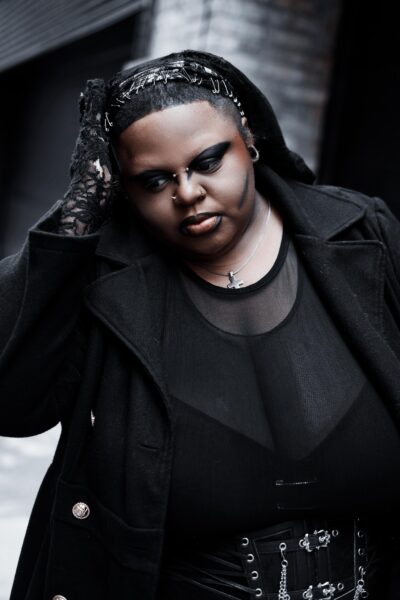

That’s why the term retrosynthesis fits so well — the music is about reducing chaos into clarity, breaking things down until only what truly matters remains.
The record has also been described as a reflection of growth and metamorphosis. How did you have to grow in order to be able to create this album? And how did you grow through the process of creating the record?
The record is a reflection of growth and metamorphosis, and that growth came from having to let go of a lot. I had to leave many things in the past in order to move forward. During the process of creating this record, I lost one of my best friends, someone I had bonded with over Hendrix since I was about 13. I lost him to liver failure caused by alcoholism, and that made the start of 2024 incredibly heavy and painful. At the same time, I was also losing another best friend in Detroit, someone I’d been close with since eighth grade. In many ways, I feel like I lost him to societal expectations and standards.
Between 2015 and 2024, life was extremely intense for me. I went through chaotic living situations with roommates, deep family drama, and constant emotional upheaval. Eventually, I reached a point where I had to start shedding my past. A lot of things walked away, but at the same time, a lot of beautiful and aligned things entered my life. As I let go, things began to improve — especially in my music career.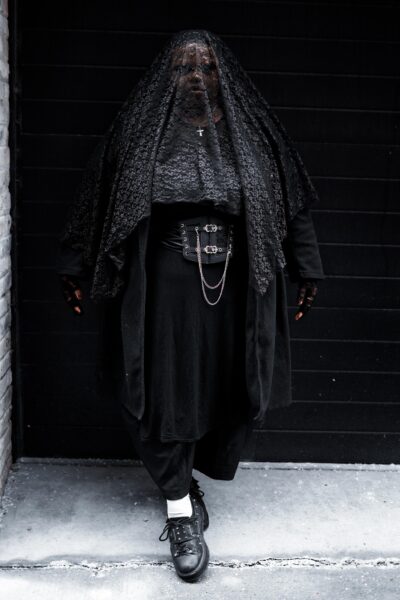
The album is about shedding old skin, creating space for new layers, and finding empowerment within yourself. It’s a reflection point — about crawling your way out of darkness and choosing growth even when it hurts. It’s a document of transformation — of letting go, surviving, and becoming something new.
Truth, Survival, Self-liberation
What story (or stories) are you telling with this album?
I’m telling a lot of different stories on this record. I’m telling stories about how the people who raise you and teach you can sometimes make life look harder than it actually is — and how, when you branch out and truly become yourself, you realize there are so many different ways to live, create, and move through the world beyond what you were taught. There are stories of abuse in relationships, of mourning and loss, but being honest about how things reached that point. Stories about trying to love someone through every obstacle thrown in your direction. And ultimately, stories about crawling out of darkness and finding your own light. It’s many stories, but they all live in the same emotional universe — truth, survival, self-liberation, and becoming who you really are.
I’m also telling stories about finding the courage to release expectations and be yourself despite your upbringing or background. About feeling like a mental patient trapped inside your own mind — filled with brilliant thoughts that come across as chaotic to people who can’t see beyond a rigid, “normie” point of view.
What is a song that is special to you on the album, and why?
All of the songs are special to me, but I would have to say the song “Throw the Keys” is especially close to my heart. It’s very simple and a bit repetitive on purpose — just like a lot of my music. That repetition is intentional; it’s almost a way of ingraining positivity into you. Repetition is necessary for growth and healing — whether it’s staying consistent with routines, diets, or repeating affirmations over and over until they start to bring life to something. The track genuinely calms me down during panic attacks, which is something I never planned but deeply value.

Music Travels Where Headlines Don’t
You dedicated your track “Nazareth” to the liberatory struggles against occupation and oppression from Palestine to Sudan and Congo. In your opinion, what role do artists play in struggles for liberation?
The track “Nazareth” was very intentional for me. I call it ritual protest wasn’t just poetic language, it really was an offering, a moment of focus and alignment dedicated to liberatory struggles against occupation and oppression, from Palestine to Sudan to Congo. I wanted the song to feel spiritual, confrontational, and rooted in truth, not detached commentary. I believe artists play an important role in interconnected struggles for liberation because art has always been a carrier of memory, resistance, and emotional truth.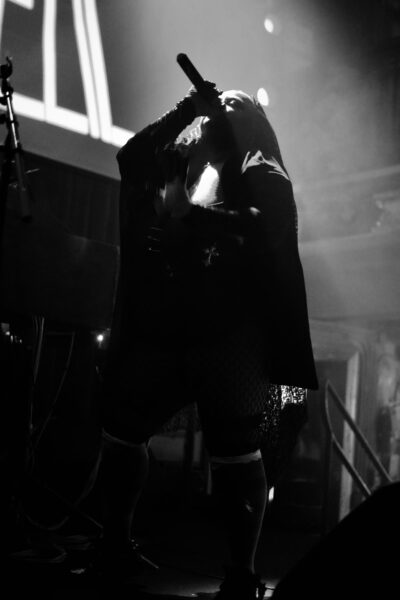
Music travels where headlines don’t. It reaches people in their bodies and spirits before it reaches their intellect. As artists, especially those with platforms, we have a responsibility to not look away or stay silent just because something is uncomfortable or politicized. Silence is not neutral.
For me, speaking out isn’t about virtue signaling, it’s about alignment. I can’t create honest art while ignoring the suffering, displacement, and violence happening across the globe, especially when so many of these struggles are connected through systems of colonialism, exploitation, and erasure.
I see my role as using my voice to bear witness, to create space for reflection, and to remind people that liberation is collective. If we’re not paying attention to each other’s struggles, then we’re not truly free. “Nazareth” exists as a reminder of that — a call to consciousness, solidarity, and spiritual resistance.

All photos by Darkvisionaries.
Retrosynthesis Vol. 1 by Tiffadelic is out now via Darthpira Records. Stay up to date with Tiffadelic via her Instagram.