


Alice Vyvyan-Jones: Let’s set the tone. Salami Rose Joe Louis, if you had to describe the “universe” your music takes place in, what would it look or feel like?
Salami Rose Joe Louis: I imagine a lot of weird, cuddly aquatic creatures mixed with sofas, all floating in the air. In regards to time and smell, you can’t really place it; it reminds you of the past, but also the future. That probably sounds totally crazy.
You have a background in science, so I’m curious how that feeds into your music. Are they at all similar?
I studied environmental science, so I like to incorporate climate change and broader issues into my music. Especially with some of the more conceptual projects–interjecting those ideas and letting the music subtly be a place to ask those questions and imagine different futures in a very weird and psychedelic way is magical.
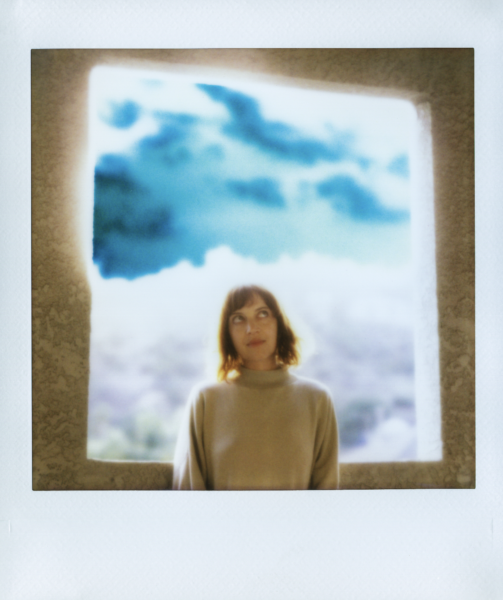
Photo by Kevin Kison
“There’s a level of focus that I find similar in both the music and the science world. There are also so many shapes in organic chemistry, just like music, too, which is very visual for me– they’re both technical and abstract, but always ever-changing.”
So in the creative process of making music, what comes first for you?
I feel it is so haphazard and changes a lot. I like to spend time reading and learning words before I start writing. But I find writing incredibly hard– you can imagine one thing in your head and then when it comes out, in a song or on paper, it’s not quite what you imagined. Sometimes it’s almost like you hear your thoughts abstractly, but you can’t quite get them onto paper. I think that’s why I started writing all these concept albums, because I wanted to try to do something intentional.
A More Personal Universe
I want to talk about your latest project, Lorings. Can you tell me about the album and how it came about?
Lorings captures a time when I was really trying to grapple with a pretty patronising and misogynistic environment in the music industry. I felt a lot of pressure from the label I was signed to, as well as external pressures I’ve put on myself, to write these elaborate sci-fi narratives and try to always do something grand. Lorings was an attempt to be really personal and brutally honest with some of the things that I just think about on a day-to-day basis. I wanted to undercook it because I feel like sometimes I can tinker and add a bunch of things and make things a little too maximal. I kept it gentle and stripped down– it’s emotive and raw.
“While past projects were bound by sci-fi, conceptual stories in a different kind of universe, I wanted this project to be part of more of a personal universe.”
And the name Lorings?
Lorings is actually a nickname that a loved one gave me, so that too feels like it’s so me.
Did you learn anything whilst making it?
Yeah, for sure. I feel like it’s me trying to reclaim a lot of things that I’ve lost over the years, one thing being confidence in myself. I went through a series of having records rejected by the label, and it’s hard when you spend so much time making music for it to keep getting turned down. Lorings was actually originally rejected, but I really wanted it and I fought for it. In that process, I’ve really learnt to advocate for myself.
As an artist, do you find it easy to be authentic?
I feel like it’s ever-changing. Like when I was first making music, I had a day job and I was kind of in the science world, so my first album was incredibly reckless. I didn’t think anyone would be listening, so I just kind of went for it, I guess, in the most authentic way. I want to get back to that sort of fearlessness. But it’s a bit different now.
“There is an element of knowing that people are actually going to listen that definitely changes the equation and perhaps makes authenticity more tricky.”
Entanglements of Matter and Meaning
 Do you see music as a form of activism or a refuge?
Yes, innately, music is a beautiful and powerful force of activism. It can make humans feel connected to one another in a way that is so vast. Although it has been commodified and packaged in a capitalist way, in its most organic form, it is a resistance against isolation and bigotry that is everywhere in the world.
You speak about your body of work as not being just music. So, what are some non-artists or influences that have influenced your work?
There’s this teacher and writer, Karen Barad, and she has some really cool work surrounding the intersection of science and art. There is this one idea of the entanglement of matter and meaning, which I think is really inspiring. Octavia Butler, one of the greats of sci-fi, has definitely inspired my work a lot. I’m often blown away by visual arts as well, and a lot of painters really inspire me. I’ve also actually been painting myself!
And your next chapter, what does it look like?
I really want to explore – I want to do more film scoring and painting and take on interesting projects. I just want to be as open-minded as possible; that’s the goal.
Lorings by Salami Rose Joe Louis is out now via Brainfeeder. Stay up to date with the artist via Instagram.