


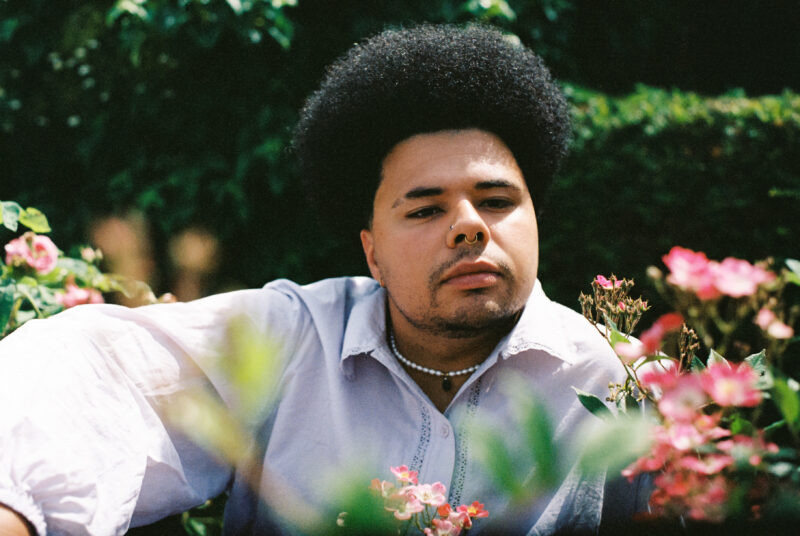
When I met Otis Mensah to talk about their latest release, small town otis, the weather could not have been more fitting. It went back and forth from a sunny blue sky to rain at least three times over the course of our conversation. Just like with their music, we experienced the warmth and the greyness of Berlin all at once—and how naturally Otis manages to find value in both.
Originally from Sheffield, UK, Otis Mensah has carved out a distinctive place in Berlin’s creative scene. A poet as much as a musician, their work moves fluidly between words and sound, treating language with the same musicality as melody. With an experimental approach to rap, jazz and beyond, they reference Pharoah Sanders just as effortlessly as Kid Cudi.
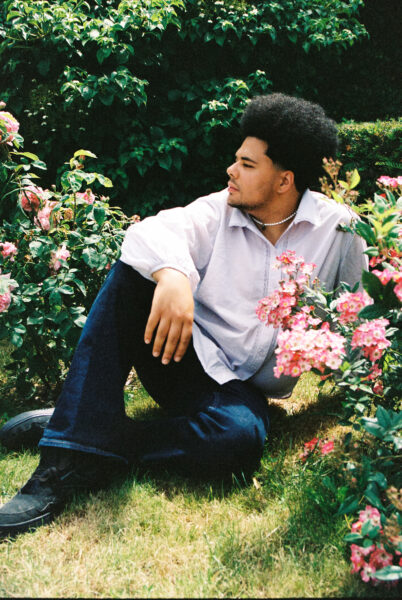
With small town otis, a collaborative EP with UK producer seigfried komidashi, they added yet another sound to an already expansive palette. “I had a curiosity for lower frequencies, listening to a lot of drone-y indie music and a lot of avant-garde alt-rock stuff. I wanted to make a bit of a shoegaze project, you know?” Otis tells me.
Unlike previous releases, the songs weren’t meticulously written beforehand. Instead, they emerged in the moment, with Otis recording thoughts as they surfaced. “A lot of it was raw, unfiltered emotion. I was kind of using it as therapy. I was very unsure whether I would release this EP because of how unfiltered and how vulnerable it was. I had held on to it for a long time.” The result is perhaps their most emotionally exposed project yet, even if that was never the goal. “I wasn’t thinking, ‘How can I put my whole state of identity into this project?’ But I think it’s the most vulnerable in what exactly I was feeling in the present.”
Berlin in Seasons
Across the EP, Otis Mensah explores self-image, displacement, dysmorphia, and the uneasy search for belonging. “small town otis was a longing for comfort and feeling a sense of claustrophobia in the big city,” they explain. “I was noticing that the less I was able to be social, the fewer calls to socialize I was receiving from the external world. Meaning it was very easy to just fall into a pit of isolation, which small town otis came from.”

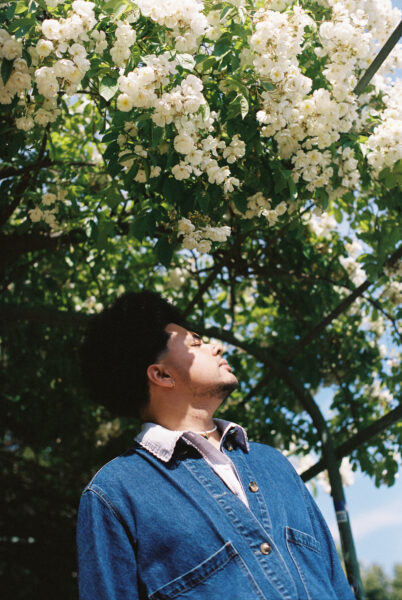
It’s a feeling many Berliners will recognise. Conversations in club toilet queues can feel life-changing before disappearing with the sunrise. Friends leave as quickly as they arrive, chasing the next opportunity. Winter has a way of shrinking the city down to the distance between your bed and your kitchen.
Yet small town otis isn’t simply a rejection of Berlin. It’s the second chapter in an ongoing dialogue with the city. Otis’s earlier EP WINTERSKIN captured the exhilaration of arriving somewhere new. “WINTERSKIN was filled with excitement, curiosity, and notions of freedom. The freedom of being in a new city, the freedom of being able to express one’s identity without the shadow of the past.” Years later, that excitement has evolved into something more complex. “Often I feel the city exists in its hyperbolic chambers,” Otis reflects. “There are some really beautiful things and some really horrible things. It is like the winter and the summer.”
Words as Instruments
Berlin hasn’t only changed the way Otis Mensah sees the world; it has changed the way they make music. In Sheffield, genre boundaries often felt more rigid. Here, they found an ecosystem of improvisers, interdisciplinary artists, and open-minded musicians eager to collaborate. “I was looking for experimental artists, and I found that in Berlin. That changed everything for me because I’m able to create work that allows me to experiment with different sounds and different instruments.”

What stood out just as much was the accessibility of that scene. “These are hyper-incredible and hyper-skilled musicians, and yet it seems very non-hierarchical. I don’t have to go to a conservatory to reach them. There’s a DIY essence to even people who are doing traditionally non-DIY-based music practices.” That collaborative spirit continues to shape Otis’ work, with their forthcoming album Come Beautify The Night expanding their sonic palette even further through a broad range of collaborations.
A freedom that has only reinforced Otis’ refusal to see rap as a fixed category. Rather than approaching music through formal training, they describe their practice through the lens of conceptual art. Their voice, in that sense, is yet another instrument.
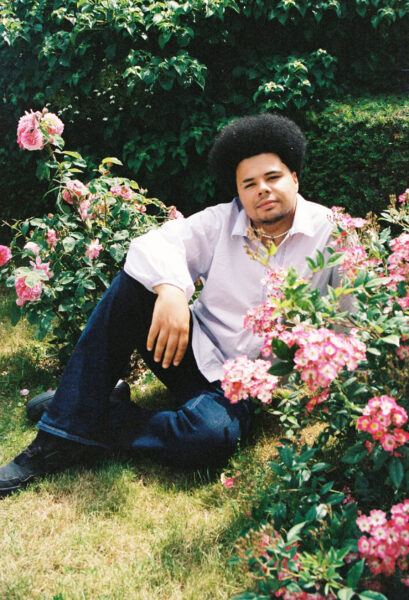
“I frame my work as a jazz musician because of my relationship to time, nonlinear time, and the way rap has the ability to be percussive. I see my lyrics quite expansively, and I see the way that I deliver vocals and cadence as an instrument.”
That creative relationship with language stretches back to childhood. Growing up in church, Otis became fascinated by the musicality of speech long before understanding every word that was being said: “In church, the way people use language is very musical. I saw an emotional response in the congregation even though I didn’t understand the functional narrative.”
Living with dyslexia only deepened that fascination. Instead of treating words as fixed meanings, they learned to hear them as sounds and textures. “I’ve always had an affinity for words. I am very dyslexic, so since very early on I had less of a functional and more of a fluid relationship with language.” What could be an obstacle elsewhere became a creative advantage. “I would often mispronounce words or use the wrong words in the wrong context. But I think what that does for art is it shows you that you can really manipulate language,” Otis adds.
Beyond Genre
That instinct – to resist rigid definitions, whether of language or genre – runs through small town otis. It’s also part of why the project currently exists only on Bandcamp. While the decision might seem like a statement against streaming platforms, Otis Mensah describes it as something much more personal. “I think it was more of a protection mechanism. I saw the work as less palatable, so I was like, the people who really care will be able to access it in a space where they understand me as an artist contextually. Whereas it felt too precious for it to just be in someone’s discovery feed.”
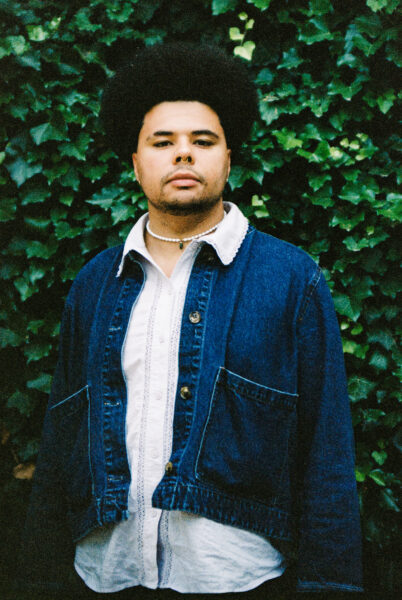
Ultimately, small town otis feels less like a stylistic detour than a natural extension of Otis’ artistic philosophy. They reject the idea that moving between genre expectations requires justification. “I wanted to speak to my relationship to the boundlessness of Black music,” they say.
“I needed to show the imaginary somebody out there that I can move between rap, drone, shoegaze and alternative rock aesthetics in a way that is seamless because it is seamless for me… I’m anchored to the roots of the music, so it allows me as a consumer to go through genres experimentally, the same as a creator.”
It’s the same openness that defines both the record and the artist behind it: an unwillingness to stay in one place, one genre or one emotional register for too long. Like the Berlin sky, small town otis never settles into a single mood. And that’s exactly what makes it feel so honest.
Photos by Ilo Toerkell for OFFKEY.
small town otis is exclusively available on Bandcamp. Follow Otis Mensah on Instagram to be up-to-date with upcoming shows, releases, and their forthcoming album Come Beautify The Night, out in November.